
Kerbstone Price in Nepal: Types, Sizes, Grades and Buying Guide
Buying the right kerbstone is not always as simple as comparing prices. Many homeowners, contractors, and project managers in Nepal spend hours contacting different suppliers, only to receive different rates for similar products. Without understanding the differences in grade, size, and quality, it is easy to choose the wrong product and end up paying more in the long run.
A poor quality kerbstone may crack under heavy traffic, wear out during Nepal’s monsoon season, or require replacement much sooner than expected. This can increase maintenance costs and delay your construction project.
Everything is gathered in one location with this guide. The most recent kerbstone prices in Nepal, various types of kerbstone, regular sizes, concrete grades, typical uses, and helpful purchasing advice will all be covered. Whether you’re building a driveway, road, walkway, or landscaping project, this guide will help you confidently select the ideal kerbstone.
Quick Price information:
Approximate kerbstone price in Nepal ranges from NPR 340 to NPR 560 per piece, depending on the type, grade, size, and order quantity. Prices may vary by manufacturer, transport, and project location.
Main purpose of kerbstones
A quality road kerb stone does much more than separate roads from sidewalks. It also improves the appearance and durability of infrastructure
- keeps pedestrian walkways and roads apart.
- prevents damage to the borders of roads.
- directs rainfall to aid in better drainage.
- directs cars and maintains traffic in designated lanes.
- increases the safety of pedestrians.
Modern concrete kerbstone products are manufactured as precast concrete kerbstone units. They offer consistent quality, better strength, and easier installation than site-cast alternatives. They are commonly used for roadside kerb systems, public infrastructure, commercial projects, and residential developments throughout Nepal.
Kerbstone Price in Nepal 2026
The concrete grade, size, production quality, transportation distance, and order quantity are some of the variables that affect kerbstone prices in Nepal. Kerbstones used in residential or landscaping projects are typically less expensive than premium goods designed for highways or heavy vehicle traffic.
The approximate kerbstone price Nepal ranges below are based on current market trends and should only be used as a general guide.
Note: Prices shown below are approximate factory price ranges for 2026 and exclude VAT and transportation charges.
| Type | Grade | Standard Size | Approx. Price/Piece (NPR) |
| Half Battered | M15 | 600 × 300 × 150 mm | Rs. 340 – Rs. 390 |
| Half Battered | M20 | 600 × 300 × 150 mm | Rs. 390 – Rs. 460 |
| Half Battered | M25 | 600 × 300 × 150 mm | Rs. 460 – Rs. 540 |
| Bullnose | M20 | 600 × 300 × 150 mm | Rs. 420 – Rs. 500 |
| Channel Kerbstone | M20 | Standard | Rs. 450 – Rs. 560 |
Prices may vary depending on custom sizes, project location, bulk orders, and manufacturer specifications.
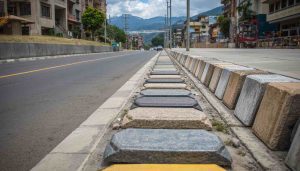
What Affects Kerbstone Price?
The final kerbstone price in Nepal is influenced by a number of factors. You may more effectively evaluate quotations and select items that meet the needs of your project by being aware of these elements.
Some of the most important factors includes the following:
- Concrete grade: Higher grades provide greater strength and durability.
- Kerbstone dimensions: Larger units require more raw materials.
- Manufacturing quality: Well-produced precast concrete products generally perform better over time.
- Travel distance: Delivery costs increase for remote project locations.
- Bulk supply:Prices are frequently lower for larger orders.
- Project location: Prices may differ between Kathmandu Valley and other parts of Nepal.
Instead of choosing the cheapest option, compare the overall manufacturing quality, durability, and delivery cost to get better long-term value.
Half Battered Kerbstone Price
The half battered kerb stone is one of the most commonly used kerbstones in Nepal. Its sloping front face makes it suitable for highways, municipal roads, commercial streets, and public infrastructure projects where vehicles regularly move over road edges.
Approximate price ranges includes the following:
- M15: Rs. 340 – Rs. 390 per piece
- M20: Rs. 390 – Rs. 460 per piece
- M25: Rs. 460 – Rs. 540 per piece
Higher grades are recommended for roads carrying heavier traffic because they provide better strength and a longer service life.
The Bullnose Kerbstone Price
Bullnose kerbstones have a rounded front edge, giving them a safer and more attractive finish. They are widely used in parks, gardens, public walkways, schools, hospitals, and landscaped areas where pedestrian safety is important.
Depending on the grade and size of the concrete, approximate market costs typically fall between Rs. 420 and Rs. 500 per piece. Despite being a little more costly than some typical kerbstones, their smooth quality makes them a great option for decorative and pedestrian-friendly projects.
Kerbstone Price by Grade (M15, M20 & M25)
Concrete grades indicate the strength of a kerbstone. Choosing the right grade is similar to choosing different levels of safety equipment. A stronger helmet offers better protection, and a higher concrete grade provides better performance under heavier loads.
- M15 is suitable for light-duty residential applications.
- M20 works well for most municipal roads and public infrastructure.
- M25 is a heavy-duty kerbstone designed for highways, industrial areas, and locations with frequent heavy vehicle movement.
Greater compressive strength from higher grades makes them more resilient to long-term wear, impact, and cracking. Purchasing the right grade can prolong the life of your project and lower maintenance expenses.
Kerbstone Types in Nepal
The location of the kerbstones will determine which types are best. Varied designs have varied uses, such as traffic control, drainage enhancement, and landscape improvement. You can make a better choice for your construction project if you are aware of the characteristics of each type.
| Type | Shape | Best Used For | Benefits |
| Half Battered Kerbstone | Sloping Front Face | Roads, highways, municipalities | Strong, durable, improves vehicle guidance |
| Bullnose Kerbstone | Rounded Edge | Parks, gardens, walkways | Safer for pedestrians and visually appealing |
| Channel Kerbstone | Drainage Channel | Stormwater systems, road edges | Directs water and reduces waterlogging |
Half Battered Kerbstone
The Half Battered Kerbstone is one of the most widely used kerbstone types in Nepal.
It is frequently used for:
- Road building initiatives
- Local and national roadways
- Local roads
- Business advancements
Its sloping face, also referred to as a battered kerb, prevents damage to road margins while facilitating safe vehicle movement.
Bullnose Kerbstone
A Bullnose Kerbstone features a smooth, rounded front edge.
It is ideal for:
- Public parks
- Gardens
- Schools
- Footpaths
- Walkways
The rounded bullnose kerb design improves pedestrian safety while creating a clean and attractive appearance.
Channel Kerbstone
The purpose of a Channel Kerbstone is to enhance drainage.
It is frequently implemented in conjunction with:
- The borders of roads
- Parking lots
- Channels for stormwater
- Commercial substances
The channel kerb reduces water accumulation and protects nearby pavements by diverting rainfall into drainage systems. Like other precast concrete kerbstone products, it offers a long service life and constant quality.
Standard Kerbstone Sizes in Nepal
Just as crucial as selecting the right kind of kerb stone is selecting the right size. A well proportioned kerbstone guarantees a clean installation, increases lifespan, and offers greater support. The kind of project, local design requirements, and traffic circumstances all influence the necessary size.
The table below shows some commonly used kerbstone dimensions in Nepal.
| Length (mm) | Width (mm) | Height (mm) | Common Use |
| 600 | 150 | 300 | Municipal roads |
| 600 | 200 | 300 | Highways |
| 600 | 150 | 250 | Footpaths |
| 600 | 125 | 250 | Landscaping |
When selecting a standard kerb size, always consider:
- Expected traffic load
- Required kerbstone thickness
- Drainage design
- Project specifications
- Installation method
Choosing the correct dimensions helps improve both appearance and long-term performance.
How to Choose the Right Kerbstone
Not every project needs the same type of kerbstone. Choosing the best kerbstone depends on traffic, safety, durability, and appearance. Matching the right product to the application helps reduce future maintenance costs.
Residential Driveways
- Bullnose kerbstones create a clean finish.
- Suitable for light vehicle traffic.
- Improve property appearance.
Municipal Roads
- Half battered concrete kerbstone products provide excellent edge protection.
- Suitable for everyday traffic.
- Commonly used by municipalities.
Highways
- Choose M25 grade kerbstones.
- Built for heavy vehicles.
- Excellent durability under continuous traffic.
Commercial Areas
- Strong kerbstones protect parking areas and service roads.
- Improve road edging and traffic management.
- Handle higher traffic loads.
Landscaping
- Bullnose kerbstones are popular for gardens and parks.
- Create smooth footpath edging.
- Improve the overall appearance of outdoor spaces.
Choosing the correct kerbstone helps your project remain safer, stronger, and easier to maintain for many years.
Where Kerbstones Are Used
Kerbstones are used in many different construction projects throughout Nepal. Besides creating clear boundaries, they improve safety, drainage, and the overall appearance of roads and public spaces.
Kerb stone for road
A kerb stone for road is installed along road edges to:
- Guide vehicles safely.
- Protect road shoulders.
- Prevent vehicles from leaving the roadway.
- Improve traffic organization.
A quality road kerb stone also helps direct rainwater toward drainage systems.
Kerb stone for footpath
A kerb stone for footpath creates a safe separation between pedestrians and vehicles.
Its main benefits include:
- Improved pedestrian safety.
- Better footpath alignment.
- Cleaner streetscape.
- Protection for sidewalks.
A durable footpath kerb stone also helps reduce edge damage caused by vehicles.
Kerb stone for driveway
A kerb stone for driveway provides a strong boundary around residential and commercial driveways.
It is beneficial:
- Hold the paving blocks in position.
- Stop the earth from moving.
- Enhance the look of your driveway.
- Boost longevity.
Landscaping
Kerbstones are widely used in:
- Gardens
- Parks
- Public plazas
- Resorts
- Outdoor seating sections
Creates an attractive borders while keeping landscaping materials neatly contained.
Industrial Areas
Industrial projects require stronger kerbstones capable of supporting heavy vehicle movement.
These applications include:
- Factory compounds
- Warehouses
- Logistics centers
- Truck parking areas
- Loading zones
Using the correct concrete grade helps improve durability and reduces long-term maintenance costs.
Benefits of Precast Concrete Kerbstones
A precast concrete kerbstone is manufactured in a controlled factory environment, ensuring consistent quality, strength, and finish. Compared to site-cast kerbs, precast kerbstones are easier to install, require less maintenance, and offer a longer service life. They are widely used in Nepal for roads, footpaths, commercial projects, and public infrastructure because they can withstand changing weather conditions and daily traffic.
Here are some of the key benefits:
- High reliability: Designed to resist daily use and large loads.
- Low maintenance: Lowers long-term expenses by requiring fewer repairs.
- Climate-resistant: Works well in Nepal’s hot summers and monsoon season.
- Easy installation: Factory-made units allow faster and more accurate installation.
- Long service life: Maintains its shape and strength for many years.
- Clean appearance: Creates neat concrete edging for roads, parks, and footpaths.
Many modern projects also choose heavy-duty concrete kerbstones because they provide better structural support and improve the overall finish of the project.
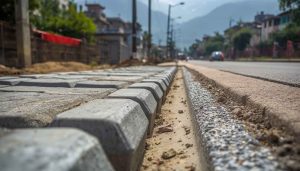
How to Install Kerbstone
Knowing how to install kerbstone correctly helps improve its strength, alignment, and lifespan. While professional installation is recommended for large projects, the basic process is easy to understand.
Basic Installation process
- Prepare the Ground
Clear the construction area and excavate the required depth. Remove loose soil, stones, and debris to create a stable base.
- Lay the Foundation
Place a compacted layer of gravel or lean concrete to provide a strong foundation for the kerbstones.
- Set the Lines and Level
Use string lines and leveling tools to ensure every kerbstone is straight and installed at the correct height.
- Place the Kerbstones
Carefully position each kerbstone on the concrete bed while maintaining consistent spacing and alignment.
- Fill the Joints
Fill the joints with suitable mortar or jointing material to lock the kerbstones securely in place and prevent movement.
For the complete technical installation process, read our detailed guide: How to Lay Kerbstones.
Why to Choose Asian Concreto Kerbstones
Asian Concreto manufactures kerbstones using strict quality control processes to deliver products that meet the demands of Nepal’s roads, footpaths, and infrastructure projects. The focus is on consistent quality, durability, and long-term performance rather than simply producing concrete products.
Why most of the contractors and developers choose Asian Concreto:
- Manufactured under Nepal Standard (NS) certification requirements.
- Produced using controlled manufacturing processes for consistent quality.
- Designed to perform in Nepal’s changing weather, including heavy rainfall and high temperatures.
- Suitable for roads carrying heavy vehicle traffic.
- Available in different grades and sizes for various construction needs.
- Used in real infrastructure projects, including the Lumbini Walkway Footpath Project.
trusted for public infrastructure projects, commercial developments, and municipal roadways throughout Nepal. A longer service life, fewer maintenance problems, and higher product quality are all made possible by choosing a reputable manufacturer.
Useful Tips Before Buying Kerbstones
Before placing your order, take a few minutes to compare products carefully. A slightly higher-quality kerbstone often provides much better value over its lifetime than the cheapest option.
Purchasing List
- Examine the concrete grade according to the specifications of your project.
- Prior to placing an order, measure the necessary dimensions.
- Examine the dimensions and features of the goods.
- Find out if the products fulfill the standards for Nepal Standard certification.
- Verify the cost of transportation before completing the quote.
- Buy from a reputable company that has experience supplying infrastructure projects.
- Examine a sample if you can to verify the general quality and surface finish.
You may prevent needless expenses and guarantee the success of your project by doing these easy inspections. To understand how product quality is regulated in Nepal, you can also visit the Nepal Bureau of Standards and Metrology (NBSM), the government body responsible for national standards.
Conclusion
Choosing the right kerbstone is about more than comparing prices. You should also consider the concrete grade, size, durability, application, and manufacturing quality before making a decision. By understanding different kerbstone types, standard dimensions, and the latest kerbstone price in Nepal, you can select products that provide long-term value for your project. You can also explore the complete Asian Kerbstone Product Catalogue to compare available sizes and specifications before requesting a quotation.
If you are planning a residential, commercial, or infrastructure project, contact Asian Concreto for the latest product information and an updated quotation based on your project requirements.
Frequently Asked Questions
1. What is a kerbstone used for?
A kerbstone is mostly used to create a strong boundary between roads, footpaths, driveways, and landscaped areas while improving safety, drainage, and road durability. Kerbstones help guide vehicles, protect pavement edges, reduce soil erosion, and direct rainwater into drainage systems. They are commonly used in roads, parks, parking areas, and commercial developments.
2. Are kerbstones weather-resistant?
Yes. Quality precast concrete kerbstones are designed to resist rain, sunlight, and changing weather conditions. When manufactured using the correct concrete mix and quality standards, kerbstones perform well in Nepal’s monsoon season as well as during hot and dry weather.
3. Can kerbstones endure or support heavy vehicle loads?
Yes. High-grade kerbstones such as M20 and M25 are designed to support heavy vehicle traffic when installed correctly.
These grades provide greater compressive strength, making them suitable for highways, industrial areas, commercial roads, and municipal infrastructure projects.
4. What is the kerbstone price in Nepal in 2026?
The approximate kerbstone price in Nepal in 2026 generally ranges from Rs. 340 to Rs. 560 per piece, depending on the type, concrete grade, size, manufacturer, and transportation cost. For the most accurate pricing, request an updated quotation based on your project requirements.
5. Which kerbstone grade is best?
The best kerbstone grade depends on where it will be used.
- M15 is suitable for light residential projects.
- M20 is recommended for municipal roads and public infrastructure.
- M25 is the preferred choice for highways and heavy vehicle traffic because of its higher strength.
6. What is the difference between half battered and bullnose kerbstones?
Half-battered kerbstones have a sloping front face and are mainly used for roads and highways, while bullnose kerbstones have a rounded edge that is better suited for parks, gardens, and pedestrian walkways.
The choice depends on whether the project prioritizes vehicle movement or pedestrian safety.
7. Which kerbstone is best for footpaths?
Bullnose kerbstones are generally the best option for footpaths because their rounded edges improve pedestrian safety while providing a neat and attractive appearance.
They are commonly installed in parks, schools, hospitals, and public walkways.
8. How long do precast concrete kerbstones last?
Quality precast concrete kerbstones can last for several decades when manufactured to proper standards and installed correctly. Regular maintenance, proper drainage, and selecting the correct concrete grade all help maximize their service life.
Recent Blog


Other Articles

Best Pool Deck Pavers & Poolside Areas in Nepal: Slip-Resistant Guide
A wet pool deck is one of the easiest places to slip and get hurt. It...
How Much Do Pavers Cost in Nepal? Complete 2026 Pricing Guide
Quick Answer: Concrete pavers in Nepal cost between NPR 40 and NPR 130 per piece depending...
Permeable Pavers: The Future of Flood-Resilient Urban Infrastructure in Nepal
Every monsoon season, the same story repeats across Kathmandu, Pokhara, and dozens of other Nepali cities....
German Technology vs Local Manufacturing: Why It Matters in Construction
When you are walking along a beautifully paved street or a well-designed commercial complex, you rarely...

Lumbini Walkway Footpath Project: A Case Study of Modern Urban Walkway Development
Lumbini Walkway Footpath Project is a strong example of how good infrastructure can turn public spaces...

The Architect’s Choice: 10 Premium Building Materials in Nepal for Mastering the Outdoors
If you have been searching for trusted building materials in Nepal that actually hold up through...

Blocks in Nepal: Types, Uses, Prices & Trusted Manufacturers
The construction industry in Nepal has been evolving rapidly, with urbanization, infrastructure development, and a demand...
Building Sustainable Infrastructure in Kathmandu with Asian Concreto
Kathmandu Valley’s unique environment demands building materials that are strong, reliable, and suited to its climate...