
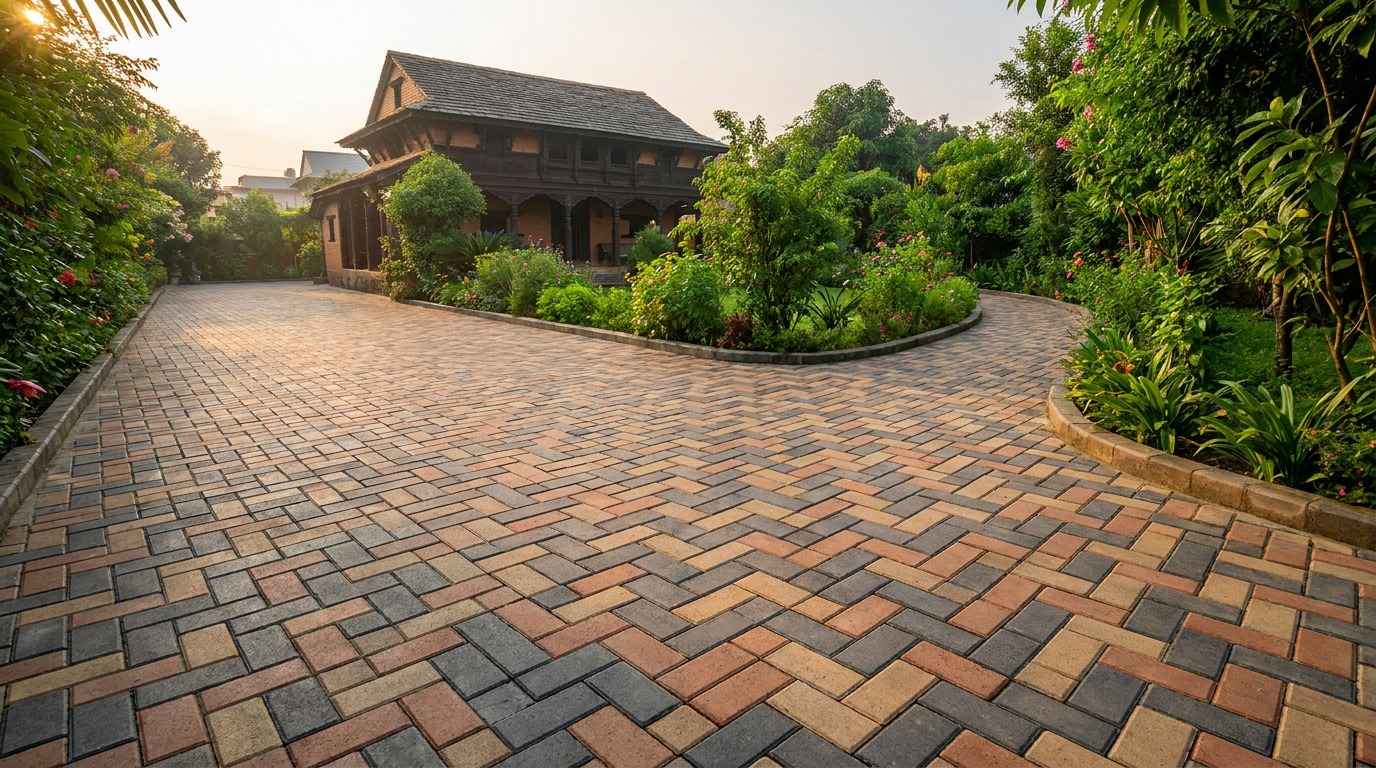
How Much Do Pavers Cost in Nepal? Complete 2026 Pricing Guide
Quick Answer: Concrete pavers in Nepal cost between NPR 40 and NPR 130 per piece depending on type and grade. Installed cost ranges from NPR 600 to NPR 1,700 per sq ft including material, sand base, and labour. For a standard 200 sq ft driveway or garden path, budget between NPR 26,500 and NPR 57,500 all-in. Prices vary by location, paver type, project size, and season.
You have finally decided to pave that driveway. Or maybe it is the garden path your family has been talking about for the past two years. You have picked the style. Now comes the question that stops every project in its tracks how much is this actually going to cost?
Getting a straight answer on paver prices in Nepal is harder than it should be. Suppliers give vague quotes. Google shows Indian prices. And nobody tells you about the hidden costs the sand base, the labour, the compaction work underneath that can easily double your original estimate.
This guide gives you real 2026 prices for every major paver type available in Nepal, explains what drives cost up or down, and walks you through how to calculate your actual budget before you call a single supplier. All prices are in Nepalese Rupees (NPR) and reflect current market rates across the Kathmandu Valley and major Terai cities. For an estimate based on your exact measurements, use Asian Concreto’s free Area Calculator.
1. Paver Prices in Nepal at a Glance (2026)
The table below covers the most commonly used concrete paver types in Nepal. Prices reflect premium-quality, M35-grade concrete pavers the grade used by organized manufacturers. Local unbranded products may appear cheaper; we explain what that actually means in Section 4.
| Paver Type | Price per Piece (NPR) | Price per Sq Ft (NPR) | Best Used For |
| Rectangular Paver | NPR 40–65 | NPR 600–900 | Driveways, pathways, parking |
| Cobble Paver | NPR 55–80 | NPR 750–1,100 | Garden paths, decorative areas |
| Zigzag / Interlock | NPR 45–70 | NPR 650–950 | Roads, heavy traffic areas |
| Hexagon Paver | NPR 60–90 | NPR 850–1,200 | Parks, plazas, open spaces |
| Grass Paver | NPR 70–100 | NPR 900–1,300 | Lawns, eco-friendly driveways |
| Permeable Paver | NPR 90–130 | NPR 1,100–1,700 | Flood-prone areas, eco projects |
| Nostalgic / Romba | NPR 75–110 | NPR 1,000–1,500 | Premium residential, heritage |
Important: The price per sq ft above covers paver material only. It does not include installation labour, base preparation, sand bedding, or delivery. See Section 3 for the full installed cost breakdown.
View individual product pages for full specifications:
- Rectangular Paver
- Cobble Paver
- Zigzag Paver
- Hexagon Paver
- Grass Paver
- Permeable Paver
- Nostalgic Paver
2. What Affects the Cost of Pavers in Nepal?
Paver pricing in Nepal is not fixed. Five key factors determine what you will actually pay. Understanding them helps you budget realistically and avoid surprises.
Paver type and design complexity
A standard rectangular paver is the most affordable because it is simple to manufacture and easy to lay. Specialty shapes hexagons, cobble patterns, nostalgic designs require more complex moulds and more skilled laying time. Permeable pavers sit at the higher end because of their engineering for water drainage, but they save on drainage infrastructure and reduce flood risk.
Concrete grade and strength
Premium pavers use M35-grade concrete meaning they withstand 35 megapascals of compressive stress. This is the standard Asian Concreto uses across all products. Budget-grade local pavers often use M20 or M25. They cost 15 to 25 percent less but crack faster under heavy loads or Nepal’s monsoon cycles. Saving NPR 10 per paver and replacing the whole driveway in three years is not a saving.
Project size and bulk pricing
Most suppliers in Nepal offer significant bulk discounts. A small 50 sq ft garden path and a 500 sq ft commercial parking area will have very different per-unit costs. For projects above 300 sq ft, always negotiate. Organized manufacturers like Asian Concreto can provide competitive rates for larger volumes.
Your location in Nepal
Kathmandu Valley, Pokhara, and major Terai cities have better supply access and more competitive pricing. Remote districts face 10 to 30 percent higher costs due to transportation. If you are building outside the valley, factor delivery charges into your budget from day one.
Season and timing
Construction costs in Nepal fluctuate with the season. The dry months from October to February see high demand and often higher prices. Monsoon season slows construction some suppliers offer off-season discounts, but installation quality suffers in heavy rain. The best time to order pavers is September to October: stock up before peak season begins.
3. The Full Installed Cost What Most Buyers Miss
The biggest mistake people make when budgeting for pavers is focusing only on the material price. Here is a realistic breakdown for a 200 sq ft project a standard home driveway or garden path.
| Cost Item | Estimated Cost (NPR) | Notes |
| Paver material (200 sq ft) | NPR 12,000–26,000 | Varies by paver type and grade |
| Sand and gravel base | NPR 3,000–6,000 | Essential for longevity |
| Installation Cost | NPR 8,000–18,000 | Based on project scope |
| Base compaction | NPR 2,000–4,500 | Per project |
| Edge restraints / kerbstones | NPR 1,500–3,000 | Prevents spreading |
| Total (200 sq ft) | NPR 26,500–57,500 | Complete installed cost |
Installation costs vary by region and project complexity. In Kathmandu, installation tends to run higher due to living costs and demand. Terai cities are generally more competitive. Always get a written quote that specifies whether base preparation is included the difference in scope can mean a 40 percent cost difference.
For larger projects such as commercial parking lots or government footpaths, a Bill of Quantities prepared by a civil engineer is essential. Contact Asian Concreto for project-specific estimation support.
4. Cheap Pavers vs Quality Pavers What You Are Actually Buying
Walk through any hardware market in Kathmandu and you will find paver blocks at NPR 25 to 35 per piece. It is tempting. But here is what the price difference actually represents.
- Compressive strength: Local unbranded pavers are often M20 grade. They begin to crack under vehicle loads within 2 to 3 years. Premium M35-grade pavers handle the same load for 20 or more years.
- Dimensional accuracy: Poorly manufactured pavers vary in thickness and size. This creates uneven surfaces that hold water, cause trip hazards, and look unprofessional within months of installation.
- Manufacturing process: Asian Concreto manufactures using German vibro-press technology that compacts concrete at precise pressure and vibration frequencies producing consistent density throughout each block. Hand-cast or low-pressure local products cannot replicate this.
- Climate durability: Monsoon rainfall, freeze-thaw cycles in hill areas, and direct sun at Terai temperatures are brutal on weak concrete. Quality pavers are engineered to handle Nepal’s full climate range without degrading.
The true cost of cheap pavers includes replacement costs, repair labour, and the disruption of digging everything up in 3 years. Read more on this in our blog: Sustainable Concrete Solutions in Nepal.
5. How to Calculate How Many Pavers You Need
This simple calculation saves most homeowners from over-ordering or running short mid-project.
The formula
- Measure your area: Length (ft) x Width (ft) = Total sq ft
- Divide by paver coverage: A standard 200x100mm paver covers approximately 0.22 sq ft
- Add 10 percent for cuts and waste: Total sq ft divided by 0.22, then multiply by 1.10
Example: A driveway measuring 12 ft x 20 ft = 240 sq ft. Calculation: 240 divided by 0.22, multiplied by 1.10 = approximately 1,200 pavers. At NPR 50 per piece average: NPR 60,000 in material + NPR 15,000 in labour = NPR 75,000 all-in.
For complex shapes L-shaped paths, circular patios, or irregular gardens use Asian Concreto’s Area Calculator tool. It handles non-rectangular areas and gives you a materials estimate instantly.
6. Paver Prices Across Nepal Kathmandu vs Terai vs Other Regions
Location affects pricing more than most buyers realize. Here is how prices compare across Nepal’s major regions.
- Kathmandu Valley: Widest product selection, most competitive pricing, best delivery network. Ideal for premium residential and commercial projects. Asian Concreto has a sales office at Kalikasthan, Kathmandu.
- Pokhara and Gandaki Province: Mid-range pricing. Some premium products require delivery from Kathmandu or Nawalpur. Allow 3 to 5 days lead time for bulk orders.
- Terai – Butwal, Birgunj, Biratnagar, Chitwan: Asian Concreto has business partners and project sites across the Terai. Material prices are competitive and transport within flat terrain is efficient. View the Terai project gallery for reference.
- Hill districts and remote areas: Add NPR 10 to 30 per piece for transport depending on accessibility. Plan orders 2 to 3 weeks ahead.
Asian Concreto currently serves more than 17 districts across Nepal and has expanded into India Lucknow, Gorakhpur, Ayodhya, and Varanasi. To confirm coverage for your location, contact the team directly.
7. Which Paver Type Is Right for Your Project?
Price is one factor. Choosing the right paver for your specific use case is another. Here is a practical guide.
For home driveways
Choose Rectangular Pavers or Interlock Pavers. Both handle vehicle loads well, are easy to repair individually without breaking up the whole surface, and are the most cost-effective options for residential use.
For garden paths and patios
Consider Cobble Pavers or Hexagon Pavers for visual character. Nostalgic Pavers work beautifully for heritage or traditional Nepali aesthetic spaces.
For gardens with existing lawn
The Grass Paver is designed for this its hollow grid lets grass grow through while providing a stable load-bearing surface for vehicles and foot traffic. An excellent eco-friendly option for residential properties.
For flood-prone areas
The Permeable Paver and Permeable Tiles allow rainwater to pass through the surface and recharge groundwater rather than becoming runoff. This is particularly valuable in Kathmandu Valley where flooding is a serious seasonal problem. Read more: Permeable paving for urban flooding.
8. Frequently Asked Questions
What is the cheapest paver available in Nepal?
The most affordable option is the standard Rectangular Paver at NPR 40 to 65 per piece, or NPR 600 to 900 per sq ft in material cost. However, going for the cheapest local unbranded option without checking compressive strength can result in early deterioration especially under vehicle loads or monsoon conditions.
Are permeable pavers more expensive than standard pavers?
Yes, by about 100 to 120 percent. Permeable pavers range from NPR 90 to 130 per piece versus NPR 40 to 65 for standard rectangular. For flood-prone areas, the premium pays for itself by reducing drainage infrastructure costs and preventing property damage from waterlogging. Many Kathmandu municipality projects now specify permeable paving for exactly this reason.
Do paver prices change by season in Nepal?
Yes. Construction activity peaks from October to February, which can push material and labour prices 15 to 20 percent higher due to demand. If your project allows flexibility, ordering materials in August to September before peak season can reduce costs. Monsoon installation carries quality risks and should be avoided where possible.
Is it cheaper to install pavers yourself?
Technically yes but not recommended unless you have experience. Proper paver installation requires accurate ground levelling, correct base depth of minimum 4 to 6 inches of compacted gravel, proper sand bedding, and edge restraints. A poorly laid paver surface fails fast. Professional installation is worth every rupee for a surface that lasts 20 or more years.
How long do concrete pavers last in Nepal’s climate?
Quality M35-grade concrete pavers last 20 to 30 years with minimal maintenance when correctly installed. Nepal’s monsoon cycles, dust, and occasional frost in hill areas are well within the tolerance range of properly manufactured concrete pavers. Low-grade products may begin showing cracks within 3 to 5 years.
Where can I buy quality pavers in Nepal?
Asian Concreto is Nepal’s largest manufacturer of precast concrete paving products, operating from a factory in Nawalpur and a sales office in Kathmandu. Products are available across 17 or more districts. Contact Asian Concreto here for a quote, or download the product catalogue to review specifications before ordering.
What is the minimum order quantity?
Most organized manufacturers accept orders from 50 sq ft upward for residential projects, with bulk pricing starting from around 200 to 300 sq ft. For smaller garden projects, some local hardware dealers stock pavers in smaller quantities, though product consistency is not guaranteed.
Can I see paver samples before ordering?
Yes. You can visit the Asian Concreto Knowledge Center for technical specifications and view the project gallery to see how different paver types look in real installations across Nepal before making a decision.
9. External Resources for Construction Budgeting in Nepal
These government and professional sources provide authoritative reference data for construction planning in Nepal.
- Nepal Bureau of Standards and Metrology (NBSM) verify NS certification for building materials
- Department of Urban Development and Building Construction (DUDBC) official government construction rates and standards
- Nepal Engineering Council (NEC) reference rates for civil engineering projects in Nepal
Ready to Start Your Project?
Now you have real numbers. Use them to build a realistic budget not the figure a supplier gives you, but the number you arrive at knowing exactly what you are buying and why.
Step 1: Use the Area Calculator to estimate how many pavers you need based on your exact area.
Step 2: Browse the full product range to choose the right paver type for your project and budget.
Step 3: Contact the Asian Concreto team for a project-specific quote. Phone: +977-9802711199. Email: info@asianconcreto.com. Sales Office: 1st Floor ShriPri Home, Kalikasthan-29, Kathmandu.
Prices in this article are estimates based on 2026 market data from Nepal’s construction materials sector. Actual prices vary by supplier, location, project volume, and market conditions. Always confirm current pricing directly with your supplier before finalising your budget.
Recent Blog


Other Articles

Kerbstone Price in Nepal: Types, Sizes, Grades and Buying Guide
Buying the right kerbstone is not always as simple as comparing prices. Many homeowners, contractors, and...

Best Pool Deck Pavers & Poolside Areas in Nepal: Slip-Resistant Guide
A wet pool deck is one of the easiest places to slip and get hurt. It...
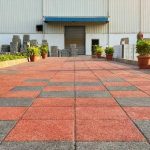
Permeable Pavers: The Future of Flood-Resilient Urban Infrastructure in Nepal
Every monsoon season, the same story repeats across Kathmandu, Pokhara, and dozens of other Nepali cities....
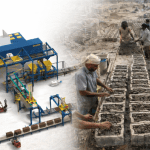
German Technology vs Local Manufacturing: Why It Matters in Construction
When you are walking along a beautifully paved street or a well-designed commercial complex, you rarely...

Lumbini Walkway Footpath Project: A Case Study of Modern Urban Walkway Development
Lumbini Walkway Footpath Project is a strong example of how good infrastructure can turn public spaces...

The Architect’s Choice: 10 Premium Building Materials in Nepal for Mastering the Outdoors
If you have been searching for trusted building materials in Nepal that actually hold up through...

Blocks in Nepal: Types, Uses, Prices & Trusted Manufacturers
The construction industry in Nepal has been evolving rapidly, with urbanization, infrastructure development, and a demand...
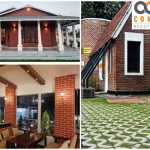
Building Sustainable Infrastructure in Kathmandu with Asian Concreto
Kathmandu Valley’s unique environment demands building materials that are strong, reliable, and suited to its climate...