
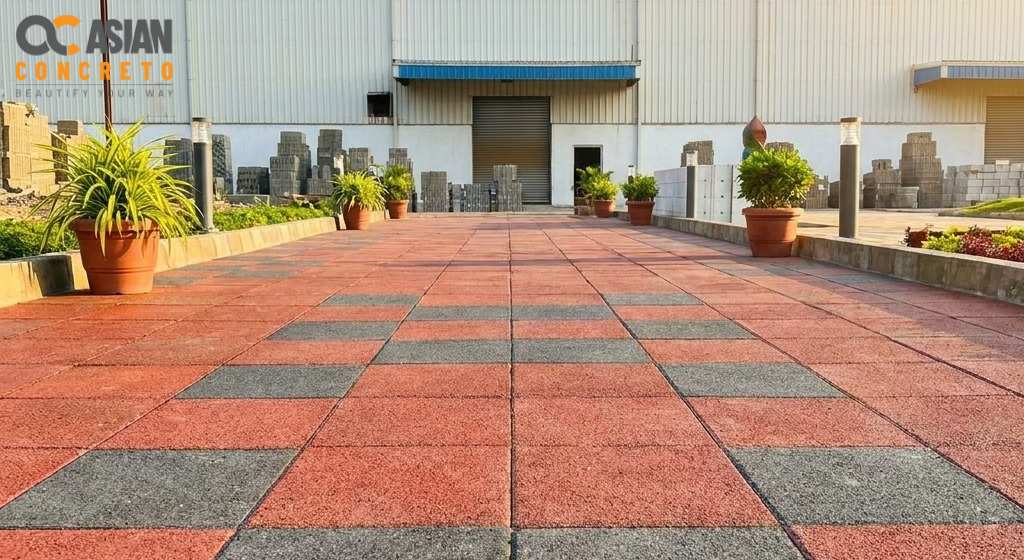
Permeable Pavers: The Future of Flood-Resilient Urban Infrastructure in Nepal
Every monsoon season, the same story repeats across Kathmandu, Pokhara, and dozens of other Nepali cities. Heavy rain falls, water pools on roads and pavements, drainage systems overflow, and neighbourhoods go underwater. People lose property. Businesses shut down. Some lose their lives.
In September 2024, Kathmandu Valley received between 240 and 322 millimetres of rainfall over just two days. Residents climbed to rooftops. 37 lives were lost in the Valley alone, with at least 192 deaths recorded across Nepal. Across the country, more than 20 hydropower projects were destroyed, and preliminary damage estimates crossed NPR 4.35 billion. In July 2024, southwestern (Kanchanpur) Nepal saw its highest ever recorded rainfall 620.4 mm in a single 24-hour period.
These are not once-in-a-century events anymore. They are becoming annual realities.
The question Nepal’s urban planners, architects, municipalities, and construction professionals need to answer is no longer whether flooding is a problem. It clearly is. The real question is: what do we build our cities with, going forward?
One of the most practical and proven answers to that question is permeable pavers.
Nepal’s Urban Flooding Problem Is Getting Worse
Urban flooding in Nepal has multiple causes, but one that is often overlooked in public conversation is the role of urban surfaces themselves.
As Kathmandu and other cities have grown rapidly over the past two decades, natural land has been replaced with concrete, asphalt, and other hard surfaces. These are impervious materials meaning they do not allow water to pass through. When rain falls on them, 100% of that water becomes surface runoff.
In natural landscapes, soil absorbs between 30% and 50% of rainfall. Trees, grass, and open ground act as sponges, slowing the movement of water and letting much of it seep down to replenish groundwater. Once you pave over that land, that absorption is gone. All the water heads straight toward drains, which then get overwhelmed.
The consequences in Kathmandu are already severe. The city’s groundwater table has been dropping by approximately 2.5 metres every year at six times the natural recharge rate. Monsoon flooding that would have once soaked into the ground now rushes across roads and into homes.
Studies on urban flood hazard in Kathmandu Metropolitan City confirm that the abundance of impervious surfaces combined with inadequate drainage infrastructure is among the primary causes of the seasonal inundation that now affects the city every year.
The infrastructure problem has been building for decades. And fixing it will require a serious rethink of what materials go on the ground.
What Are Permeable Pavers?
Permeable pavers are specially engineered concrete or stone paving units designed to allow rainwater to pass through their surface rather than run off it.
Unlike conventional solid pavers or poured concrete, permeable pavers work with an underlying system of layers that together manage water in a smarter way. Here is how the system works:
When rainwater falls on a permeable paver surface, it passes through the joints and gaps in the paving units. It then moves into a layer of open-graded aggregate (crushed stone) beneath. This aggregate layer acts as a temporary reservoir, holding the water. From there, the water either slowly infiltrates into the natural soil below, recharging groundwater, or gets directed to a controlled drainage outlet at a much slower and manageable rate.
The result is that instead of all the rainwater becoming immediate runoff during a storm, much of it is captured, filtered, and released gradually the way nature would handle it.
Permeable pavers are distinct from regular concrete pavers in one critical way: where conventional pavers send water away from where it falls, permeable pavers manage water right where it lands.
7 Reasons Permeable Pavers Are the Right Solution for Nepal
1. They Dramatically Reduce Stormwater Runoff
Research shows that properly installed permeable paver systems can cut surface runoff by as much as 90%. That is not a small improvement, it is a transformation. Less runoff means less pressure on drainage systems, less waterlogging on roads, and a far lower risk of flash flooding during intense monsoon rainfall.
For cities like Kathmandu, where drainage systems were designed for a different climate and a smaller population, this reduction is not just helpful it is essential.
2. They Recharge Groundwater
Every litre of water that soaks through a permeable paver surface instead of running off is a litre that goes back into the ground. For Kathmandu, where the groundwater table is dropping at an alarming rate, this is not a minor benefit it is critical infrastructure.
Permeable paving helps re-establish a more natural hydrological balance, allowing rainwater to replenish aquifers the way it did before urbanisation removed all the absorptive land cover.
3. They Reduce Flood Peak Flows
A study evaluating flood management strategies in Pokhara, Nepal, found that implementing low-impact development (LID) measures including permeable pavements reduced total stormwater runoff by up to 67%, with peak flows in several sub-catchments falling by more than 40%.
That 40% reduction in peak flow is particularly significant. It is during those peak moments when drainage systems are most overloaded that flooding causes the most damage. Cutting that peak substantially changes what happens to roads, buildings, and people when a monsoon storm hits.
4. They Filter Pollutants Out of Water
Rainwater that runs across city surfaces picks up oil, heavy metals, sediment, fertilisers, and bacteria before entering drains and eventually reaching rivers and streams. Permeable paver systems physically filter this water as it passes through the aggregate layers, removing a significant portion of these pollutants before the water reaches natural water bodies.
Research estimates that permeable pavers can remove up to 47% of total suspended solids from stormwater, and reduce bacterial contamination substantially making urban waterways cleaner over time.
5. They Reduce the Urban Heat Island Effect
Cities tend to be significantly hotter than surrounding rural areas because hard surfaces absorb solar energy and radiate it as heat. This effect, known as the urban heat island effect, worsens heat stress in urban populations and increases energy consumption for cooling.
Permeable surfaces reduce this effect by allowing water to evaporate from the surface and from the sub-layers below. This evaporative cooling keeps surface temperatures lower and contributes to a more comfortable urban microclimate important for a growing city like Kathmandu, where summers are getting progressively hotter.
6. They Are Built to Last
Permeable pavers, when properly installed, offer a lifespan of 30 to 50 years. This is considerably better than conventional asphalt, which degrades quickly, absorbs heat, and requires frequent maintenance. In the long run, permeable paving reduces the costs associated with flood damage repair, surface degradation, and drainage system upkeep making it a smart economic choice beyond just the environmental benefits.
7. They Work Without Sacrificing Aesthetics
One concern people sometimes raise about sustainable infrastructure is that it will look industrial or plain. Permeable pavers put that concern to rest. They are available in a wide range of designs, colours, and finishes, making them suitable for footpaths, parks, plazas, driveways, parking areas, and public spaces. A well-designed permeable paver surface can be just as visually appealing as any conventional paving while doing far more useful work beneath it.
Real-World Proof: What Research and Experience Tell Us
The evidence for permeable pavers is not theoretical. Researchers specifically studying Pokhara, Nepal, found that integrating permeable pavement into urban drainage strategies produced a 67% reduction in runoff volume and over 40% reduction in peak flood flows. These results came from real hydrological modelling of actual catchment areas in a Nepali city with monsoon-heavy rainfall patterns not from a Western case study applied loosely to Nepal’s context.
Globally, the picture is consistent. A comprehensive review of permeable pavement studies published in late 2025 confirmed that beyond reducing surface runoff, permeable pavements provide pollutant filtration and evaporative cooling benefits that accumulate over their long operational life making them one of the most multi-functional green infrastructure investments a city can make.
What makes Nepal’s situation particularly well-suited to permeable paving is the combination of high monsoon rainfall intensity and the current state of urban drainage infrastructure, which was never designed to handle the volumes that rapidly growing cities now generate. Permeable paving does not replace drainage systems it takes pressure off them, which is exactly what Nepal’s overstretched urban infrastructure needs.
Where Permeable Pavers Work Best in Nepal’s Urban Context
Permeable pavers are not just for large infrastructure projects. They are versatile and applicable across a wide range of settings:
Footpaths and Pedestrian Walkways: Urban footpaths are among the simplest and highest-impact applications. Replacing conventional paving on footpaths with permeable alternatives costs relatively little more but delivers significant stormwater management benefits across a large surface area.
Parking Lots and Vehicle Bays: Parking areas represent large expanses of impervious surface in most cities. Converting these to permeable paving allows the area to contribute to groundwater recharge and runoff reduction instead of acting as a flood amplifier.
Residential Driveways and Courtyards: Homeowners can make a meaningful contribution to flood resilience in their neighbourhoods by choosing permeable pavers for their driveways and outdoor spaces. The individual impact per household is modest, but across a neighbourhood, the cumulative effect is significant.
Public Parks and Plazas: Parks and urban public spaces that incorporate permeable paving can become active flood management assets, absorbing water during storms and releasing it slowly rather than funnelling it toward overwhelmed drains.
Commercial and Institutional Premises: Office complexes, shopping centres, schools, and government buildings typically have large paved areas. Specifying permeable pavers for these projects delivers both corporate sustainability credentials and genuine infrastructure value.
Permeable Pavers vs. Traditional Pavers: A Simple Comparison
| Feature | Traditional Pavers | Permeable Pavers |
| Water handling | Repels water, causes runoff | Absorbs water, reduces runoff by up to 90% |
| Groundwater impact | Prevents natural recharge | Actively recharges groundwater |
| Flood risk | Increases peak runoff during storms | Reduces peak runoff by 40%+ |
| Urban heat | Contributes to heat island effect | Reduces heat island through evaporative cooling |
| Pollutant filtration | None | Filters suspended solids, bacteria, heavy metals |
| Lifespan | 15–25 years (asphalt) | 30–50 years |
| Aesthetic options | Wide variety | Wide variety |
| Installation cost | Lower upfront | Slightly higher upfront, lower lifetime cost |
| Best suited for Nepal | Standard use cases | Flood-prone areas, urban upgrades, public infrastructure |
Common Questions About Permeable Pavers in Nepal
What are permeable pavers?
Permeable pavers are concrete or stone paving units engineered with joints, gaps, or a porous structure that allows rainwater to pass through the surface and into the ground below, rather than running off the surface. They work as part of a layered drainage system that manages stormwater where it falls.
How do permeable pavers help prevent flooding?
By allowing water to infiltrate rather than run off, permeable pavers dramatically reduce the volume and speed of stormwater entering drainage systems. This reduces pressure on drains during heavy rainfall and lowers the risk of waterlogging and flash flooding.
Are permeable pavers suitable for Nepal’s monsoon climate?
Yes Nepal’s heavy monsoon rainfall is precisely the kind of climate where permeable pavers deliver the most value. Research conducted specifically on Nepali cities like Pokhara confirms significant reductions in runoff and peak flood flows when permeable paving is incorporated into urban drainage planning.
Do permeable pavers require a lot of maintenance?
The main maintenance need is periodic cleaning of joints to prevent clogging from dirt and debris. This is straightforward and infrequent compared to the repair costs associated with flood damage on conventional paving. With proper installation and basic upkeep, permeable pavers can function effectively for decades.
What is the difference between permeable pavers and regular concrete pavers?
Regular concrete pavers are solid and impervious water cannot pass through them. Permeable pavers are designed with open joints or porous materials that allow water to drain through the surface and into a specially prepared sub-base. The two look similar on the surface, but they perform in fundamentally different ways during rainfall.
Can permeable pavers be used in high-traffic areas?
Yes. Permeable pavers are engineered for structural load-bearing performance. They are used in parking lots, driveways, and pedestrian areas globally, and are designed to handle the load requirements of those applications while maintaining their drainage function.
Where can I get permeable pavers in Nepal?
Asian Concreto manufactures permeable pavers and permeable tiles in Nepal, produced using German technology to meet high standards of quality, consistency, and performance.
Asian Concreto’s Permeable Solutions: Built for Nepal
Asian Concreto has been at the forefront of concrete landscaping in Nepal, and the company’s permeable product range is a direct response to the infrastructure challenges facing Nepali cities today.
The Asian Permeable Pavers and Asian Permeable Tiles are manufactured in Nepal using German technology, ensuring dimensional accuracy, structural strength, and reliable drainage performance. These products are designed to meet the demands of Nepal’s monsoon climate delivering the infiltration capacity that urban surfaces need to manage heavy seasonal rainfall without failing under load or degrading prematurely.
Whether the application is a municipality upgrading footpaths, a developer designing a flood-resilient parking facility, an architect specifying materials for a sustainable public space, or a homeowner making a responsible choice for their driveway Asian Concreto’s permeable range offers a product that is engineered for the job and manufactured locally.
With over 10,000 projects completed across Nepal and a distribution network reaching cities from Kathmandu to Pokhara, Butwal to Biratnagar, Asian Concreto is positioned to support Nepal’s urban infrastructure transition at scale.
Conclusion
Nepal cannot afford to keep building its cities the same way. Every monsoon season with impervious surfaces covering more and more urban land, the flooding gets worse, the drainage systems get more overwhelmed, and the groundwater gets harder to recover.
Permeable pavers are not a silver bullet but they are a highly practical, proven, and immediately available solution that addresses the root cause of urban flooding rather than just trying to deal with the symptoms after the fact.
The research conducted in Nepal’s own cities confirms it. The September 2024 floods demonstrated the stakes. The technology exists, the products are available, and the case for making permeable paving a standard element of Nepal’s urban construction is clear.
The future of flood-resilient cities in Nepal will be built on surfaces that let water do what it is supposed to do sink into the ground, recharge the water table, and return to the cycle of nature. Permeable pavers make that possible.
To explore Asian Concreto’s range of permeable pavers and permeable tiles, visit the Products section or reach out to the team for project-specific guidance.
Recent Blog


Other Articles

Kerbstone Price in Nepal: Types, Sizes, Grades and Buying Guide
Buying the right kerbstone is not always as simple as comparing prices. Many homeowners, contractors, and...

Best Pool Deck Pavers & Poolside Areas in Nepal: Slip-Resistant Guide
A wet pool deck is one of the easiest places to slip and get hurt. It...

How Much Do Pavers Cost in Nepal? Complete 2026 Pricing Guide
Quick Answer: Concrete pavers in Nepal cost between NPR 40 and NPR 130 per piece depending...
German Technology vs Local Manufacturing: Why It Matters in Construction
When you are walking along a beautifully paved street or a well-designed commercial complex, you rarely...

Lumbini Walkway Footpath Project: A Case Study of Modern Urban Walkway Development
Lumbini Walkway Footpath Project is a strong example of how good infrastructure can turn public spaces...

The Architect’s Choice: 10 Premium Building Materials in Nepal for Mastering the Outdoors
If you have been searching for trusted building materials in Nepal that actually hold up through...

Blocks in Nepal: Types, Uses, Prices & Trusted Manufacturers
The construction industry in Nepal has been evolving rapidly, with urbanization, infrastructure development, and a demand...

Building Sustainable Infrastructure in Kathmandu with Asian Concreto
Kathmandu Valley’s unique environment demands building materials that are strong, reliable, and suited to its climate...