
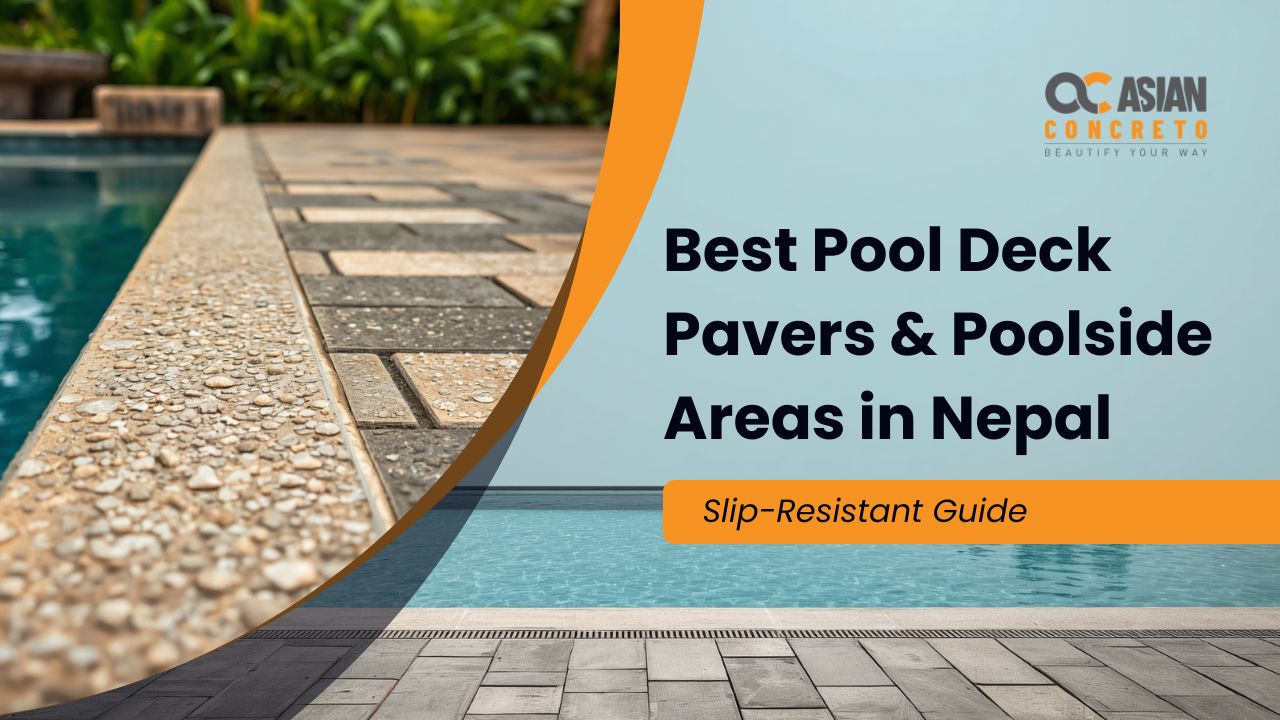
Best Pool Deck Pavers & Poolside Areas in Nepal: Slip-Resistant Guide
A wet pool deck is one of the easiest places to slip and get hurt. It happens at home, at hotel pools, and even at community swimming pools all over Nepal. One moment you are walking normally, and the next moment your foot slides right out from under you.
Regular tiles might look nice in photos, but the moment water splashes on them, they turn dangerously slick. Nepal’s weather does not help either. With long monsoon months and humid summers, poolside floors stay wet for most of the year, so the risk of slipping never really goes away.
This is exactly why choosing the right pool deck pavers matters so much. The right slip-resistant pavers stay grippy even when soaked, stay cool under the sun, and last for years without cracking or fading. In this guide, we will walk through the best pavers for poolside areas in Nepal, what to look for before buying, and how to avoid common mistakes with wet area flooring.
What Are Pool Deck Pavers? (Quick Answer)
Pool deck pavers are concrete blocks made to handle wet, high traffic areas around swimming pools. Unlike regular pavers used for driveways, these are designed with safety and comfort as the top priority.
A paver only counts as pool deck grade if it has:
- A textured, non smooth surface for better grip
- Low water absorption, so it does not soak up pool water
- Resistance to heat build up, so it stays comfortable on bare feet
- Certified compressive strength, so it holds up in wet, high traffic zones
Why Poolside Areas Need Different Pavers Than Driveways or Walkways
Driveway pavers are built mainly to carry heavy weight, like cars and trucks driving over them again and again. Pool pavers have a different job. Instead of focusing only on strength, they focus on grip and comfort. A driveway paver can be perfectly strong but still too smooth and slippery to use safely near water.
Why Slip-Resistance Matters for Pool Decks in Nepal
Water and smooth tiles are a dangerous combination. The moment a smooth surface gets wet, it loses almost all of its grip, and that is exactly when people slip and fall.
Some people are at higher risk than others:
- Kids who love running around the pool
- Elderly guests who need steady footing
- Anyone walking barefoot, since bare feet grip less than shoes
To measure how safe a surface really is, manufacturers use something called a slip rating, often written as R10 or R11. Think of it like a grip score. The higher the number, the better the grip, especially on wet floors. Even OSHA points to friction level as a key measure of how safe a walking surface really is, which is exactly what a slip rating is designed to capture.
Because of the lengthy monsoon season and hot summers in Nepal, this is especially important. Here, poolside surfaces can remain wet for months at a time, so skid-resistant pavers are more than just a nice extra. They are a true necessity for safety, and selecting the right non-slip tiles early on saves a great deal of difficulty down the road.
Types of Pavers for Pool Decks & Poolside Areas
There are a few common pavers types used around pools today:
- Concrete pavers, the most common and budget friendly option
- Natural stone, like granite or marble, known for a luxury look
- Ceramic or vitrified swimming pool tiles, often used indoors or in smaller pool areas
Each of these pavers types has its own strengths, but the right choice usually comes down to budget, climate, and how much upkeep you are willing to do.
The Difference: Concrete Pavers vs Natural Stone for Pool Decks
Selecting the proper pool deck material has an impact on comfort, safety, and long-term expenses in addition to the appearance of your outdoor area. Both natural stone and concrete pavers have unique benefits that should be considered before making a decision in Nepal, where climate and sourcing are major factors.
| Factor | Concrete Pavers | Natural Stone |
| Cost | Lower cost – manufactured locally in Nepal | Higher cost – often imported |
| Heat (underfoot comfort) | Lighter colors reflect more heat, staying cooler underfoot | Tends to retain more heat, especially darker stone |
| Maintenance | Minimal upkeep, little to no sealing needed | Needs regular sealing to prevent staining and water damage |
| Durability | Strong and consistent, but can chip or crack over time | Naturally dense and long-lasting, resists wear well |
| Slip Resistance | Textured finishes available for good grip | Varies by stone type; some polished finishes can be slippery when wet |
| Aesthetics | Uniform look, wide range of colors/patterns | Unique, natural variation gives a premium, high-end appeal |
| Overall Winner | Wins on price, comfort, and low maintenance | Better for premium/natural aesthetic despite higher upkeep |
Both options can look great, but when comparing concrete pavers vs natural stone for pool deck projects in Nepal, concrete usually wins on price, comfort, and low maintenance.
Key Features to Look for in Pool Deck Pavers
Before buying any pool deck tiles, check for these features:
- Skid or slip resistance, so feet do not slide even when wet
- Low water absorption, so the paver does not soak and weaken over time
- Heat reflective color, so the surface stays cool enough to walk on
- High compressive strength, so it can handle years of foot traffic
- Easy to clean, and resistant to algae or mold growth
Getting these right keeps your wet area flooring safe and good looking for years, whether it is a home pool or a busy resort deck.
How to Plan Your Pool Deck Size & Layout
Before you order any pool pavers, it helps to know exactly how much space you are working with. Getting your pool deck size right avoids running short on material halfway through the project, or overordering and wasting money.
A few quick tips:
- Measure the length and width of the poolside area first
- Add a little extra for cutting and wastage, usually around 5 to 10 percent
- Measure the coping edge separately, since it is priced and installed differently from the main deck area
If you want an easy way to work this out, Asian Concreto’s free Area Calculator tool can do the math for you in seconds, so you order the right amount the first time.
Don’t Forget Pool Coping, The Edge That Matters
Pool coping is simply the border stone that wraps around the edge of the pool. It is easy to overlook, but it might be the most important part of the whole deck.
This is because coping is where people step in and out of the pool the most. Since feet are wet at this exact spot, the coping needs to be even grippier than the rest of the deck.
Asian Concreto’s kerbstone products work similarly to pool coping, as they are built to handle edges, water exposure, and constant foot traffic without wearing down quickly. Pairing solid pool pavers with proper coping gives your wet area flooring a complete, safe finish from edge to edge.
Best Asian Concrete Pavers for Pool Decks in Nepal
If you are looking for reliable pavers for pool area use in Nepal, here are four Asian Concreto products built with pool decks in mind.
Asian Cobble, Best All-Rounder for Pool Decks
Asian Cobble has a smart, square-shaped design that works well in almost any poolside layout. It comes with excellent skid resistance and a compressive strength of 35 N/mm2 or more, making it a solid, dependable choice for pool deck pavers.
Asian Matrix, Best for Modern, Elegant Poolside Design
Asian Matrix brings a clean, modern look to poolside areas without giving up on safety. It is listed for pool deck use and holds up well under constant water exposure and daily foot traffic.
Asian Arena, Best for Decorative Circular Patterns
Asian Arena stands out with its unique quarter-circle design, letting you create eye-catching circular patterns around your pool. It is approved for pool deck use and offers a nice mix of style and durability.
Asian Fusion Tile, Best for Textured Grip
Asian Fusion Tile is built with a textured surface that adds extra grip, exactly what you want in a wet, high-traffic poolside area. It also comes with excellent skid resistance as a standard feature, making it one of the safer swimming pool tiles on this list.
Pool Deck Pavers for Hotels & Resorts in Nepal
Nepal’s hotel and resort scene is growing fast, especially around Kathmandu and the lakeside areas of Pokhara. Many of these properties now have swimming pools, which means resort pool flooring and hotel pool tiles are becoming a bigger deal than before.
For hotels and resorts, choosing the right pool deck pavers is not just about looks. Here is why commercial properties need to be extra careful:
- Guest safety matters a lot, since a slip and fall can lead to real legal and reputation problems
- Pool areas at hotels see much higher daily foot traffic than a home pool
- The flooring still needs to look premium and welcoming, not just functional
Good pool deck pavers solve all three problems at once, giving hotels and resorts a safe, good looking, and long lasting poolside surface for years of guest use.
Installation & Maintenance Tips for Poolside Pavers
Buying the right pool pavers is only half the job. Proper installation and care matter just as much.
Useful Tips:
- Proper base preparation stops pavers from shifting or sinking over time
- Use polymer stabilized joint sand between pavers to stop weeds from growing through
- Clean the surface regularly to prevent algae or mold buildup, especially in shaded, damp areas
- Recheck slip resistance every year for busy commercial pools, since surfaces can wear down with heavy use
Following these simple steps keeps your non-slip tiles working exactly as they should, and keeps your wet area flooring safe for years to come.
Why Choose Asian Concreto as Your Paver Block Manufacturer in Nepal
When picking a paver block manufacturer in Nepal, it helps to know who you are working with.
Asian Concreto manufactures its products using automated German technology, which means every paver comes out consistent in size, strength, and quality. The company is also Nepal Standard certified (NBSM) and has completed more than 10,000 projects across Nepal and India.
If anyone is searching for dependable pool deck pavers, working with an established, certified paver block manufacturer in Nepal means fewer surprises and a product that is genuinely built to last.
Conclusion
Choosing the right pool deck pavers is one of the smartest decisions you can make for your poolside areas, whether it is a small home pool or a busy resort. The right slip-resistant pavers keep everyone safer, look great for years, and prevent the need for constant repairs or replacements.
If you are ready to upgrade your pool deck, explore Asian Concreto’s pool-ready pavers or use their free Area Calculator to plan out exactly what you need.
Frequently Asked Questions
1. Are concrete pavers slip-resistant enough for pool decks?
Yes, as long as they have a textured surface and a proper slip rating like R10 or R11. Plain, smooth concrete is not a good choice for pool decks.
2. What is the best paver for a pool deck in Nepal?
Asian Cobble and Asian Fusion Tile are both strong choices, since they combine skid resistance with solid compressive strength for wet, high traffic areas.
3. Can pool deck pavers get hot in the sun?
Darker colors can get hot, but lighter colored concrete pavers reflect more heat and stay much cooler underfoot, even on sunny days.
4. What is pool coping and do I need it?
Pool coping is the border stone around the pool’s edge. Yes, you need it, since it protects the pool structure and gives you a safe, grippy spot to step in and out of the water.
5. What’s the difference between pavers and coping?
Pavers are the flat blocks that make up the main surface of the pool deck, the area you walk and sit on. Coping is the border piece that sits right at the pool’s edge, and it needs extra grip since that’s where wet feet step in and out of the water most often.
6. How do I calculate how many pavers I need for my pool deck?
Measure the length and width of your poolside area, add 5 to 10 percent extra for cutting, and use a free tool like Asian Concreto’s Area Calculator to get an exact number.
Recent Blog

Other Articles

Kerbstone Price in Nepal: Types, Sizes, Grades and Buying Guide
Buying the right kerbstone is not always as simple as comparing prices. Many homeowners, contractors, and...
How Much Do Pavers Cost in Nepal? Complete 2026 Pricing Guide
Quick Answer: Concrete pavers in Nepal cost between NPR 40 and NPR 130 per piece depending...
Permeable Pavers: The Future of Flood-Resilient Urban Infrastructure in Nepal
Every monsoon season, the same story repeats across Kathmandu, Pokhara, and dozens of other Nepali cities....
German Technology vs Local Manufacturing: Why It Matters in Construction
When you are walking along a beautifully paved street or a well-designed commercial complex, you rarely...

Lumbini Walkway Footpath Project: A Case Study of Modern Urban Walkway Development
Lumbini Walkway Footpath Project is a strong example of how good infrastructure can turn public spaces...

The Architect’s Choice: 10 Premium Building Materials in Nepal for Mastering the Outdoors
If you have been searching for trusted building materials in Nepal that actually hold up through...

Blocks in Nepal: Types, Uses, Prices & Trusted Manufacturers
The construction industry in Nepal has been evolving rapidly, with urbanization, infrastructure development, and a demand...

Building Sustainable Infrastructure in Kathmandu with Asian Concreto
Kathmandu Valley’s unique environment demands building materials that are strong, reliable, and suited to its climate...