

Why Pavers Are a Better Alternative to Conventional Road Construction Materials
In the world of modern infrastructure, road durability, safety, and sustainability are paramount. Traditional materials like asphalt and concrete slabs have long dominated road construction. However, concrete pavers are increasingly emerging as a superior alternative – especially on hilly or high-traffic roads.
This is particularly true in high-altitude regions where construction is challenging due to extreme cold, heavy snowfall, rain, steep slopes, and rapid temperature fluctuations. These conditions cause asphalt and plain concrete to crack, erode, or become slippery – making roads unsafe and costly to maintain.
In this blog, we’ll explore why pavers are a more intelligent choice than traditional materials for mountainous areas. We’ll also examine how Asian Concreto is contributing to the construction of stronger, safer, and more durable infrastructure in these demanding environments..
Challenges with Traditional Materials
Road construction in high-altitude and hilly regions is extremely challenging due to harsh weather, rugged terrain, and short construction seasons. Traditional materials like black asphalt and plain concrete often fail under these conditions. Asphalt roads become slippery during rain and snow, increasing accident risks, and suffer cracking from freeze-thaw cycles and intense sunlight.
Poor drainage and steep slopes worsen erosion and landslides, leading to frequent and sometimes deadly accidents, especially during winter and monsoon seasons. Despite these dangers, traditional road materials have not effectively addressed these issues.
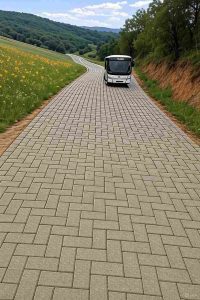
High-quality concrete paver blocks offer a safer, more durable alternative. Their superior skid resistance reduces slipperiness, while their interlocking design withstands freeze-thaw damage better. Pavers also support better drainage and allow easy repair by replacing individual blocks.
Overall, paver blocks provide a reliable, long-term solution for road construction in mountainous and high-altitude areas, improving safety and resilience against extreme conditions.

Why Paver Blocks Are a Better Choice
Paver blocks are better suited for high-altitude infrastructure projects. Here’s why:
- Skid Resistance: A Critical Safety Advantage
One of the primary safety benefits of paver surfaces is their natural skid resistance. Unlike smooth asphalt or polished concrete, pavers feature a textured finish and multiple joint lines, providing superior traction. This significantly reduces the risk of skidding, particularly in wet, icy, or steep terrain—making them an ideal choice for mountainous and hilly roads where driver safety is paramount. - Durability and Effective Load Distribution
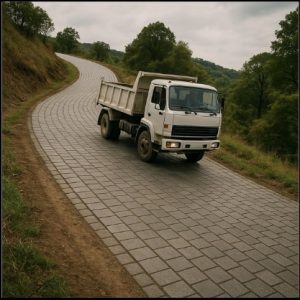
Pavers are engineered to interlock, ensuring even distribution of weight across the surface. This structural advantage enables them to endure heavy traffic loads, including large vehicles, without cracking or forming ruts—issues commonly seen in asphalt roads. Their flexible design also accommodates ground movement and temperature variations, reducing the likelihood of surface damage. - Low Maintenance and Environmental Benefits
Pavers offer ease of maintenance, as damaged units can be replaced individually without disturbing the entire surface, minimizing repair costs and downtime. Moreover, permeable paver options support sustainable construction by allowing rainwater to percolate through the surface. This helps reduce runoff and promotes groundwater recharge, contributing to better environmental stewardship.
Ideal for Mountainous Terrain
Paver blocks are highly suitable for a wide range of applications, including sloped village paths, mountain roads and foot trails, urban walkways in hilly cities, as well as driveways, parking areas, and open public spaces. Their interlocking design and durable construction allow them to adapt seamlessly to irregular terrain, making them especially effective in challenging landscapes.
In addition to offering a solid, slip-resistant surface, paver blocks are built to withstand the harsh freeze-thaw cycles common in high-altitude regions. This resilience ensures long-term performance and minimal maintenance, even in demanding environmental conditions.
Types of Pavers Commonly Used
Pavers come in many shapes and sizes, and each type is useful for different purposes. Rectangular pavers are simple and strong, making them great for roads and driveways. Hexagon and interlock pavers can handle heavy weights, making them suitable for areas with high traffic. Cobble pavers have a classic look, perfect for traditional or heritage-style spaces. Square pavers are well-suited for use in walkways, gardens, and public paths. UniPavers are strong and used in factories or commercial areas. Behaton pavers are suitable for sloped paths or ramps because they provide extra grip.Behaton I pavers are designed to lock tightly, making them ideal for places that need strong support. With so many options, it’s easier to choose the right paver based on its location and intended use.
Why Professionals Trust Asian Concreto Pavers
One of the leading manufacturers of high-quality hydraulic pavers in Nepal is Asian Concreto. Their pavers are explicitly designed for the country’s diverse and challenging terrain. From village development projects to municipal walkways and rural roadways, Asian Concreto’s products are used widely across the country. Engineers, contractors, and government bodies rely on them because of their consistent strength, long-term durability, and suitability for high-altitude and difficult-to-reach locations. The company offers a variety of shapes and types that cater to both functional and aesthetic needs, helping infrastructure projects succeed in even the most demanding environments.
Conclusion
Concrete pavers are more than just visually appealing – they provide long-term, practical advantages over traditional road materials. In high-altitude and rugged regions where extreme weather conditions and challenging terrain are constant factors, pavers deliver superior performance. Their anti-skid surface enhances safety, particularly on steep or icy roads, while their strength and interlocking design ensure durability under heavy loads. Pavers also support effective drainage and are easy to maintain, with damaged units replaceable individually. Whether for urban infrastructure or remote rural roads, concrete pavers offer a reliable, flexible, and environmentally sustainable solution – especially where safety and terrain are critical concerns.
FAQ’S
-
Why are pavers better than asphalt or concrete in high-altitude areas of Nepal?
Pavers are better suited to handle extreme weather and terrain. They don’t crack easily, provide better grip, and are easier to repair and maintain compared to asphalt or poured concrete.
-
Are pavers suitable for mountain regions like Mustang or Rasuwa?
Yes, pavers are ideal for high-altitude areas. Their strong structure and modular design make them suitable for steep slopes, narrow paths, and remote locations.
-
Do pavers work well in snow and rain?
Yes, quality pavers have a textured surface that offers good traction even in wet or icy conditions, reducing the risk of slipping or skidding.
-
Can damaged pavers be replaced easily?
Yes, individual pavers can be replaced without disturbing the entire surface. This makes repairs faster, easier, and more cost-effective.
-
What types of pavers does Asian Concreto offer for different needs?
Asian Concreto offers a wide range of pavers, including Rectangular, Interlock, Behaton I, Cobble, Unipaver, Square, Grass Paver, Romba, Zigzag, and Hexagon pavers—each suited for specific functional and design requirements.
Recent Blog


Other Articles

Kerbstone Price in Nepal: Types, Sizes, Grades and Buying Guide
Buying the right kerbstone is not always as simple as comparing prices. Many homeowners, contractors, and...

Best Pool Deck Pavers & Poolside Areas in Nepal: Slip-Resistant Guide
A wet pool deck is one of the easiest places to slip and get hurt. It...
How Much Do Pavers Cost in Nepal? Complete 2026 Pricing Guide
Quick Answer: Concrete pavers in Nepal cost between NPR 40 and NPR 130 per piece depending...
Permeable Pavers: The Future of Flood-Resilient Urban Infrastructure in Nepal
Every monsoon season, the same story repeats across Kathmandu, Pokhara, and dozens of other Nepali cities....
German Technology vs Local Manufacturing: Why It Matters in Construction
When you are walking along a beautifully paved street or a well-designed commercial complex, you rarely...

Lumbini Walkway Footpath Project: A Case Study of Modern Urban Walkway Development
Lumbini Walkway Footpath Project is a strong example of how good infrastructure can turn public spaces...

The Architect’s Choice: 10 Premium Building Materials in Nepal for Mastering the Outdoors
If you have been searching for trusted building materials in Nepal that actually hold up through...

Blocks in Nepal: Types, Uses, Prices & Trusted Manufacturers
The construction industry in Nepal has been evolving rapidly, with urbanization, infrastructure development, and a demand...