

Concrete Blocks in Nepal: Types, Benefits, Prices & Uses
Over the past few years, concrete blocks have become a popular building material in Nepal. Because they are strong, durable, and cheap, they are slowly taking the place of red bricks in many residential and commercial projects. It can help you make better decisions when building a house, a wall, or a business if you know what concrete blocks are used for in Nepal.
In this blog, we’ll explore what concrete blocks in Nepal are, how they are made, the types available in Nepal, and what makes them a preferred choice for modern construction. We’ll also look at their dimensions, usage, pricing, and the reasons behind their growing popularity.
What Are Concrete Blocks?
Concrete blocks are rectangular building blocks that are already made from a mix of cement, aggregates, and water. They are also called cement blocks or concrete masonry units (CMUs). Because they are shaped and hardened in controlled environments, they are very strong and consistent. These blocks can be used to build both load-bearing and non-load-bearing walls because they are strong and look nice.
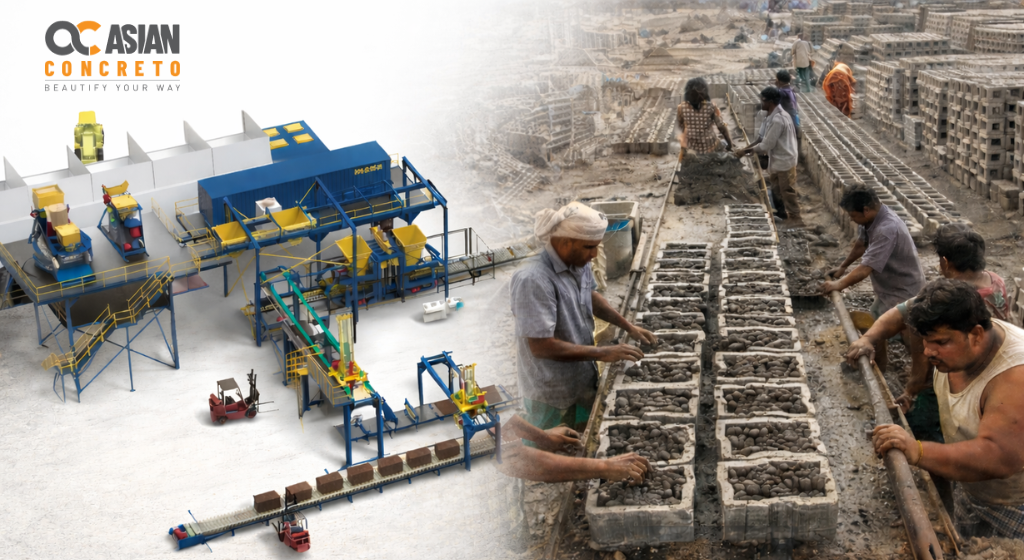
The most significant advantage of using concrete blocks in Nepal is that they are locally produced, cost-effective, and compatible with Nepal’s diverse geography and climate. Many companies, like Asian Concreto, use automated German machinery to make these blocks, which keeps the size, shape, and strength of the blocks very accurate.
Types of Concrete Blocks in Nepal
Nepal uses both hollow blocks and solid blocks for concrete buildings. It is decided which ones to use based on what the structure needs.
Hollow Concrete Blocks
Hollow blocks are lighter and contain internal cavities that reduce the overall weight while improving insulation. Despite being lightweight, they provide good strength and are commonly used in residential buildings, partitions, and even boundary walls.
For quick building, these blocks are perfect. When compared to regular bricks, these blocks can be laid faster because they are smaller and lighter. Plus, the hollow structure keeps heat and noise out better, making it a good choice for homes in cities that need to save space and block out noise.
Solid Concrete Blocks
Solid blocks are denser and stronger, designed for areas that require higher load-bearing capacity. They are commonly used for foundations, columns, fire-resistant walls, and walls that are outside of buildings. Their strong construction makes them last longer in places where it rains a lot or there are earthquakes, which is an important thing to think about in Nepal.
Asian Concreto, for example, offers high-strength solid blocks that are manufactured with automated technology and cured in a climate-controlled environment. These blocks have a compressive strength that meets or beats the standards and will keep the structure strong for a long time.
Raw Materials and Composition
Usually, cement, fine aggregates (like sand), and large aggregates (like crushed stone) are what go into making concrete blocks. A normal mix has 1 part cement to 6 parts aggregates. Some manufacturers may also add extra materials like granite dust, fly ash, volcanic ash, or even recycled building waste to make the product last longer and work better.
Standardized tests are done on every batch by good manufacturers to make sure that the blocks meet the requirements for strength and density. When concrete blocks are properly cured, they stick together better with mortar and plaster, which makes the finish better and reduces cracks.
Size and Specifications of Concrete Blocks
In Nepal, concrete blocks come in different sizes. The most common hollow block size is 390 x 200 x 190 mm (8 inches).
- 390 x 200 x 190 mm (8-inch)
- 390 x 150 x 190 mm (6-inch)
- 390 x 100 x 190 mm (4-inch)
Solid blocks are often available in:
- 400 x 200 x 200 mm
- 400 x 150 x 200 mm
- 400 x 100 x 200 mm
Each block covers a specific surface area, and you’ll need approximately 1,250 to 1,350 blocks to cover a 100 m² wall, depending on size and type.
In Nepal, Grade A solid blocks usually have a compressive strength of more than 15 N/mm², which means they can be used for building structures. The compressive strength of hollow blocks is usually at least 7.5 N/mm², which is more than enough for most partition or boundary wall constructions.
Benefits of Using Concrete Blocks in Nepal
There are many reasons why concrete blocks are better than clay bricks, especially when it comes to Nepal’s building needs.
- Structural Strength
Blocks are engineered to withstand heavy loads, seismic stress, and temperature fluctuations. Solid blocks are ideal for foundational work and vertical construction. - Cost Efficiency
Though the initial price may seem slightly higher than bricks, blocks reduce the overall cost of construction by cutting down on mortar use, plastering needs, and labor time. - Thermal and Sound Insulation
Hollow blocks naturally provide insulation against heat and sound. This improves indoor comfort and energy efficiency, especially in urban homes and offices. - Faster Construction Time
Blocks are better than bricks because they cover more ground and need fewer joints. This speeds up building the wall and cuts down on the time needed to finish it. - Eco-Friendliness
Blocks manufactured by reputed companies often use sustainable methods, recycled materials, and minimal water wastage. - Durability and Low Maintenance
Weatherproof, pest-proof, and long-lasting, concrete blocks are excellent choices for building houses. They don’t readily bend, crack, or break, which lowers the long-term cost of maintenance.
Concrete Block Price in Nepal (2025 Update)
The price of concrete blocks in Nepal varies depending on the block size, strength, manufacturer, and region. Here’s a general breakdown:
- 4-inch hollow block: Rs. 65 – Rs. 86 (depending on quality)
- 6-inch hollow block: Rs. 75 – Rs. 100
- In Makwanpur, some of the most affordable options, with prices as low as Rs. 33 per block
Well-known brands like Asian Concreto offer premium blocks that cost a little more but provide longer-lasting durability, greater strength, and better long-term value. Prices may also vary depending on the ratio of cement used, transportation costs, and bulk purchase discounts.
If you’re looking for the best balance between cost and quality, it’s advisable to consult with the manufacturer directly to understand the price based on your project requirements.
Applications of Concrete Blocks
Builders find concrete blocks very useful and use them in many different types of building projects, such as:
- Residential homes (load-bearing and partition walls)
- Commercial buildings (external walls, parking structures)
- Boundary walls and retaining walls
- Fire-safe and sound-insulated walls
- Blast-resistant construction (using solid blocks)
- Interior partitions in metro stations or underground spaces
Conclusion
In Nepal, concrete blocks have changed the game because of the growing need for environmentally friendly and energy-efficient building materials. Their durability, low cost, and adaptability make them perfect for a wide range of uses, from small homes to big commercial projects. Nepal has world-class blocks because local companies like Asian Concreto are always coming up with new ways to make them and strict quality standards.
Whether you’re building your first home or managing a commercial site, understanding the types and benefits of concrete blocks is not only important but also essential; in fact, this knowledge can help you make smarter and more sustainable building choices.
FAQS About Concrete Blocks in Nepal
1. What is the standard size of concrete blocks in Nepal?
Standard hollow blocks: 390×190 mm; solid blocks: 400×200 mm.
2. Are hollow blocks weaker than solid ones?
Builders use hollow blocks to provide adequate strength for non-load-bearing walls and reinforce them where needed.
3. How much does a concrete block cost in Nepal?
Between Rs. 33 and Rs. 100, depending on type, size, and location.
4. Are concrete blocks better than traditional bricks?
Yes. They’re more durable, thermally efficient, and allow faster construction.
Recent Blog



Other Articles
German Technology vs Local Manufacturing: Why It Matters in Construction
When you are walking along a beautifully paved street or a well-designed commercial complex, you rarely...

Lumbini Walkway Footpath Project: A Case Study of Modern Urban Walkway Development
Lumbini Walkway Footpath Project is a strong example of how good infrastructure can turn public spaces...

The Architect’s Choice: 10 Premium Building Materials in Nepal for Mastering the Outdoors
If you have been searching for trusted building materials in Nepal that actually hold up through...

Blocks in Nepal: Types, Uses, Prices & Trusted Manufacturers
The construction industry in Nepal has been evolving rapidly, with urbanization, infrastructure development, and a demand...
Building Sustainable Infrastructure in Kathmandu with Asian Concreto
Kathmandu Valley’s unique environment demands building materials that are strong, reliable, and suited to its climate...

Bricks in Nepal: A Guide to Types, Trends, and Innovations
Bricks are one of the most essential building materials in Nepal. From traditional homes in the...

Asian Concreto Partners with News24’s “Sidha Kura Mayor Sanga”
Asian Concreto, Nepal’s largest & most advanced pre-cast concrete products manufacturing company, has partnered with News24...

From Nepal to India: Landmarks Built to Last.
Across Nepal and India, there are various important landmarks, each reflecting the cultural and historical importance...