

Bricks in Nepal: A Guide to Types, Trends, and Innovations
Bricks are one of the most essential building materials in Nepal. From traditional homes in the Kathmandu Valley to modern concrete buildings, bricks shape how Nepal is developing. Over time, stronger and more eco-friendly bricks have become popular. Asian Concreto is leading this change by offering high-quality and sustainable bricks in Nepal.
In the past, handmade burnt clay bricks were widely used across Nepal. These bricks are still visible in heritage sites like Bhaktapur, Patan, and Kathmandu. Traditional bricks look beautiful and are strong, but they are often uneven in size, cause more pollution during making, and are hard to produce in large numbers. As a result, the construction industry began to shift towards more reliable alternatives.
Types of Bricks in Nepal
Nepal uses different types of bricks to meet various construction needs:
- Burnt Clay Bricks: Traditional bricks are widely used in older buildings and heritage structures. They are fire-resistant and strong, but often have uneven shapes.
- Fly Ash Bricks: Made from industrial waste materials. These bricks are lightweight, affordable, and more eco-friendly than traditional ones.
- Concrete Bricks: Strong, uniform, and ideal for modern construction. They are widely used in commercial, residential, and infrastructure projects.
- Hollow Bricks: Lightweight bricks with hollow spaces inside. They help with insulation, reduce building weight, and are easier to work with.
- Interlocking Bricks: Designed to fit together without mortar. They make construction faster, reduce material use, and are helpful for both temporary and permanent structures.
- Compressed Stabilized Earth Bricks (CSEB): Made by compressing a mix of soil, sand, and stabilizers like cement or lime. These bricks are eco-friendly, durable, and offer sound thermal insulation. They are earthquake-resistant, making them suitable for rural and sustainable building projects.
Emerging Trends in Nepal’s Brick Industry
Nepal’s brick industry is gradually changing to meet modern needs. Builders and manufacturers now focus on better quality, faster production, and safer environmental practices. Some key trends include:
- Eco-Friendly Materials: Bricks made from concrete and CSEB (Compressed Stabilized Earth Bricks) are becoming more common. These materials reduce waste, save natural resources, and are better for the environment.
- Machine-Made Bricks: More companies are using machines to make bricks. This helps improve each brick’s size, shape, and strength while speeding up production.
- Energy-Saving Production: Newer methods use less fuel and electricity than traditional kilns, reducing pollution and making brick manufacturing more efficient.
- Environmental Regulations: Brick makers now follow stricter rules to reduce smoke, dust, and other harmful emissions. This shift helps protect both workers and the surrounding environment.
Challenges in the Brick Sector
Even with ongoing improvements, Nepal’s brick industry still faces several challenges:
- Pollution from Traditional Kilns: Many brick kilns still burn wood or coal, which releases smoke and harms the environment.
- Uneven Quality: Brick quality can vary widely from one supplier to another, making it difficult for builders to achieve consistent results.
- Lack of Skilled Labor: During busy construction seasons, there’s often a shortage of trained workers who know how to work with different types of bricks.
- Low Awareness of Eco-Friendly Options: Many people still don’t know about green building materials like fly ash or CSEB bricks, which are better for the environment.
Asian Concreto: Leading the Way in Modern Brick Solutions
Asian Concreto is a trusted name in Nepal’s construction industry. The company produces premium concrete bricks using modern, eco-conscious technology. Unlike traditional brick kilns that release much smoke and dust, Asian Concreto uses machinery that minimizes emissions and conserves energy. Their production process ensures consistent size, superior strength, and reduced environmental impact.
Key features of Asian Bricks include:
- Uniform size and smooth finish
- Eco-friendly, low-emission manufacturing
- High compressive strength
- Low water absorption for long-lasting durability
Asian Concreto offers a premium range of Asian Bricks, engineered to meet diverse construction needs. These concrete bricks are known for their strength, durability, and dimensional accuracy, making them ideal for both load-bearing and non-load-bearing walls. With excellent sound and thermal insulation, reduced plastering needs, and minimal wastage, Asian Bricks ensures efficiency from construction to long-term performance.
Unlike traditional methods that rely on wood- or coal-fired kilns, Asian Concreto employs a fully automated, German-engineered plant to manufacture bricks. This eco-conscious production process significantly reduces emissions, conserves energy, and supports a cleaner, safer working environment.
Asian Bricks are used in a variety of applications, including:
- Fair Face Walls
- Partition and Load-Bearing Walls
- Boundary Walls
- Decorative Features
Project Highlights of Asian Bricks
- Square Hotel, Pulchowk, Lalitpur: A major commercial development, Square Hotel is designed to withstand heavy footfall and frequent use. Asian Concreto supplied uniform, high-strength bricks that supported the mall’s need for durability and modern styling. The bricks’ consistent size and surface finish made construction efficient and reduced the need for extra plastering.

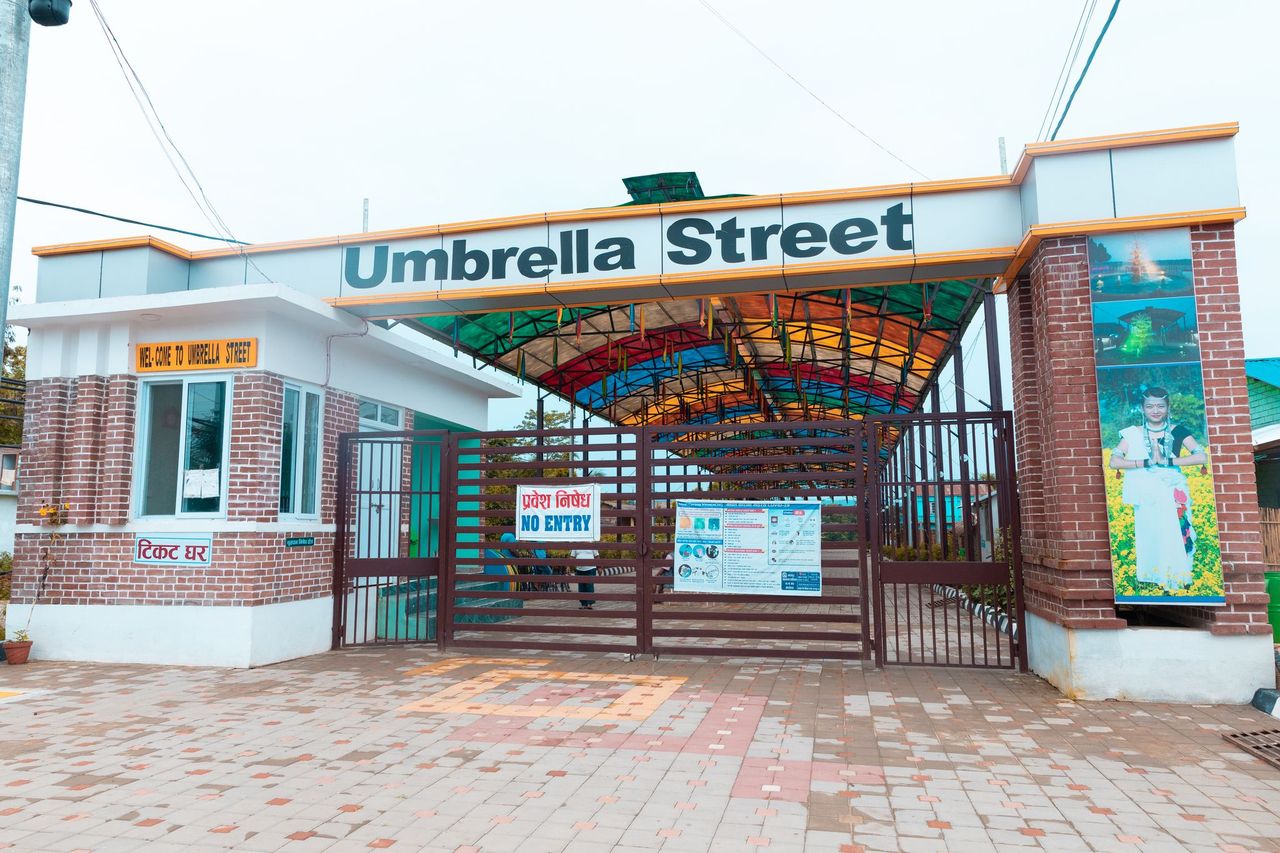
- Umbrella Street, Chitwan, Nepal: A vibrant public area where aesthetic appeal and durability were key. Umbrella Street is a popular urban attraction known for its colorful, artistic presentation. Behind the design is a strong infrastructure supported by Asian Bricks. These bricks provided both the strength required for public structures and the smooth surface needed for decorative finishes. Their durability ensures the area remains safe and attractive for daily visitors.
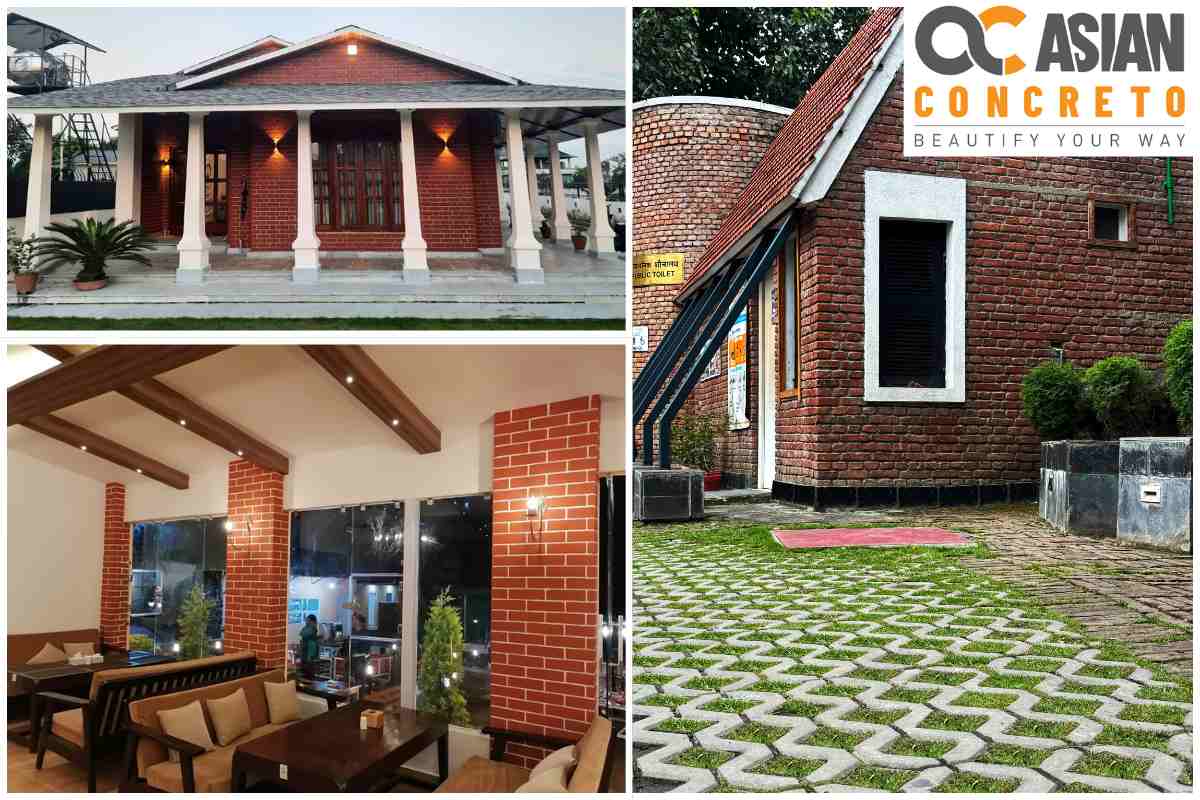
- LakeSide Palm Beach Restaurant, Pokhara, Nepal: A stylish lakeside venue where thermal insulation and finish were essential. Situated on the scenic lakeside, this restaurant required construction materials that could withstand varying weather conditions while maintaining an inviting appearance. Asian Bricks are used for their excellent thermal insulation, helping regulate indoor temperatures. Their sleek finish and water-resistant properties made them ideal for a hospitality space that emphasizes both comfort and style.

- Private Residency, Chitwan, Nepal: A residential project that benefits from the strength and uniformity of Asian Bricks. For this residential project, quality and durability were top priorities. Asian Bricks offered a reliable solution with their high compressive strength and low water absorption. This home reflects how modern building materials can enhance everyday living.

Conclusion
Bricks remain a key part of construction in Nepal, and they are used in everything from homes to large buildings. As the industry shifts toward better quality and sustainability, modern bricks like those from Asian Concreto offer a more intelligent choice. These bricks are strong, consistent in size, and made using eco-friendly technology that reduces pollution and saves energy. Whether you’re building for strength, style, or sustainability, choosing the right brick makes a big difference. With Asian Concreto, you get a reliable, durable, and greener option for any construction project.
Explore high-quality brick solutions at Asian Concreto.
Frequently Asked Questions about Bricks in Nepal
1. What are the most commonly used types of bricks in Nepal?
Burnt clay bricks are traditionally the most common, but concrete and fly ash bricks are gaining popularity due to their strength and eco-friendly benefits.
2. What makes Asian Concreto bricks different?
Asian Concreto bricks are machine-made, ensuring uniform size, strength, and a smooth finish. They are eco-friendly and designed for long-lasting durability.
3. Which bricks are best for earthquake resistance?
Compressed Stabilized Earth Bricks (CSEB) and well-made concrete bricks provide good earthquake resistance with proper construction techniques.
4. Can bricks be used in both hot and cold climates in Nepal?
Yes. Hollow and insulating bricks are ideal for extreme climates as they help maintain indoor temperatures more effectively.
5. Where can I buy high-quality bricks in Nepal?
You can explore and order quality concrete bricks directly from Asian Concreto.
Recent Blog


Other Articles
Building Sustainable Infrastructure in Kathmandu with Asian Concreto
Kathmandu Valley’s unique environment demands building materials that are strong, reliable, and suited to its climate...

Asian Concreto Partners with News24’s “Sidha Kura Mayor Sanga”
Asian Concreto, Nepal’s largest & most advanced pre-cast concrete products manufacturing company, has partnered with News24...

From Nepal to India: Landmarks Built to Last.
Across Nepal and India, there are various important landmarks, each reflecting the cultural and historical importance...

Modern Outdoor Tile Designs That Transform Your Exterior Spaces
Today, outdoor design is just as vital as interior planning, enhancing both comfort and property value....

More Than a Pathway – A Vision: Asian Concreto’s Journey for Sustainable Walkways
A footpath is a designated path that ensures the safe and convenient passage of pedestrians. It...

Grass Pavers for a Greener and Sustainable Nepal
Nepal's increasing focus on sustainability has driven demand for eco-friendly construction solutions. Traditional concrete driveways, while...

Enhancing Kathmandu’s Infrastructure with Kerbstones from Asian Concreto
Rapid urbanization growth in Kathmandu brings up the issue of resilient infrastructure. The town needs to...

Permeable Paving: A Sustainable Solution to Kathmandu Valley’s Flooding Issues
Kathmandu Valley is currently exposed to an ever-increasing risk of urban flooding due to a fast...